a Know the Known

Monday, January 14, 2013

A great mind: Ibn Khaldun

One article on this great personality will be considered as a disservice and I  shall try my best, within my capacity, to read and research more and write about the great works of the historian Ibn Khaldun who was born in 1332 in Tunis. He was educated in the religious studies of Qur'an, Hadith, jurisprudence, and law, as well as sciences such as physics, mathematics, philosophy and logic. His strong base in a wide variety of disciplines helped him to analyze the worldly affairs, specially governments, in greater depth.

Ronald Reagan, 40th president of the United States, commented on Ibn Khaldun by saying: 

“May I offer you the advice of the 14th century Arab historian Ibn Khaldun, who said: “At the beginning of the empire, the tax rates were low and the revenues were high. At the end of the empire, the tax rates were high and the revenues were low.”
And, no, I did not personally know Ibn Khaldun, although we may have had some friends in common!”[1]
His economic ideas which he analyzed during the 14th century became part of the governments’ fiscal policies around the globe. Very correctly, a co-relation has been established between the tenor of the governments and the tax rates. As per the guidelines of Islam, the Zakat (philanthropy/charity tax) is 2.5% of accumulated wealth. Other taxes like land tax, inheritance tax and tax on spending have not been popular in the Muslim World. It is quite comprehensible from the above that if the tax rates are low, the public is encouraged to pay tax and the governments end up collecting greater tax revenues. Furthermore, Ibn Khaldun stated:

“The reason for this is that when the dynasty follows the ways (sunan) of the religion, it imposes only such taxes as are stipulated by the religious law, such as charity taxes, the land tax, and the poll tax. They mean small assessments, because, as everyone knows, the charity tax on property is low.”[2]
And then he added:
“At the beginning of the dynasty, the revenues are distributed among the tribe and the people who share in the ruler’s group feeling, in accordance with their usefulness and group feeling and because they are needed to establish the dynasty, as we have stated before. Under these circumstances, their leader refrains in their favor from (claiming) the revenues which they would like to have.”
Ibn Khaldun studied government’s behavior in great depth and it seems the same behavioral trends exist till date.  Governments prefer using public finances for the welfare of the tribes and societies and to establish a strong liking or aptitude towards their rule. In contrast, when governments sway from the path and corruption becomes the culture, the tax revenues are siphoned off to non-productive areas bearing nil or negative results.
Accountability, Self-checks and balances
Umar Bin Al Khattab, the second caliph of Islam, was known to have two lamps that he would use to light his house. One lamp was funded by the tax payer’s money and he would use that only during his work, in his official capacity, as the leader of the vast empire. The second lamp was personally funded by the caliph and he would use that when engaged in personal affairs, and not of the government. It was Umar bin Al Khattab’s accountability which contributed to the strong foundations of a successfully run and contolled empire.
Ibn Khaldun opposed high levels of taxation
“The result [of high taxation] is that the interest of the subjects in cultural enterprises disappears, since when they compare expenditures and taxes with their income and gain and see the little profit they make, they lose all hope. Therefore, many of them refrain from all cultural activity. The result is that the total tax revenue goes down, as (the number of) the individual assessments go down.”
Governments tend to increase taxes excessively to finance public debt and extravagant ventures within the boundary and overseas. This negatively impacts the willingness of the public to contribute or participate in the economics of the country. Excessive taxes have discouraged investments and consumerism and this has had further effects on poverty, employment and crime rates. The words of Ibn Khaldun can be very rightly analyzed in the form of the Laffer curve as below.
The Laffer Curve, named after the American economist  Arthur Laffer, credited his work to the great Ibn Khaldun
Ibn Khaldun’s ideas have actually been known to us in the form of the Laffer curve (advocates supply-side economics). The Laffer Curve helps the economists to ascertain the optimum tax rates which maximizes the tax revenue, without the need of increasing the tax rates in proportion. The basis of setting an optimum tax rate is to encourage businesses to re-invest their profits in expanding their businesses which creates opportunities. As purchasing power increases, businesses earn more, and more jobs are created a greater number of individuals and corporations tend to fall in the tax bracket. 
I prefer to refer to the graph above as Khaldun's curve and his immense contribution to the economics of the world is extraordinarily remarkable.


[1] Ronald, Reagan. “There They Go Again.” New York Times February 18 1993, n. pag. Web. 1 Dec. 2012
[2] Ibn KhaldÅ«n. The Muqaddimah, An Introduction To History.


Sunday, December 2, 2012

Japan - The latest sick man of Asia?

The Japanese are going through an immense economic+political transformation with a collapse in the export sector in a much globalized version of recession and the more radical promises of the political parties such as increased spending on military and tougher stances on territorial disputes with neighbors which worries China.Till date, Japan's involvement in global politics, at least since the world war 2, has been only to the extent of summits which has helped Japan in promoting a soft image of itself as a global producer for many established brands. Such as portrayal did not only contribute to Japan's growth, but it benefited the entire region including China and the Koreas.

Shifts in paradigm can have some serious repercussions for  Japan and in fact it has started to face some.
Japan recorded a Government Budget deficit equal to 9.70 percent of the country's Gross Domestic Product in 2011. Historically, from 1960 until 2011, the Japanese government budget averaged -2.7% of GDP reaching an all time high in 1961 of 2.6% of GDP and an all time low of -10.5% of GDP in 2009.

The Japanese finance ministry reported a 549 billion yen trade deficit in Nov. 2012, higher than expected. The major cause of this decline is due to the territorial spat over islands between China and Japan which has in turn impacted the shipments to China, Japan's largest export market. The Chinese have initiated a strict boycott of Japanese products which has not only impacted Japanese exports to China but Japanese manufacturers who run facilities in China to meet consumer demands around the globe. 

A weak Japanese yen is not strenuous enough to make Japanese exports competitive in international markets as it is still higher than what it was five years ago, hurting exporters' profits. 

Who benefits? Using a macro lens, it's a lose-lose situation for all the stakeholders and it is just like adding fuel to fire (further exacerbating the economic crisis). Using the micro-lens, South Korea seems to be the winner in the short run. Its giants are improvising their products, both automobiles and electronics, and capturing market share in world markets. 

It can't be said that the Japanese are in a recession, unless officially announced. However, the facts and figures do not show a progressive image either.


Wednesday, August 22, 2012

The Dilemma of Politics In The Third World

There was a village inhabited mainly by poor farmers who relied solely upon their daily wages and some food supplies in return for the hard labor done on the paddy fields. They were governed by a  feudal lord who would sell the agricultural produce on high margins to exporters and traders. He preferred lending his profits to the work men in the form of loans, as this would increase their liability and submissiveness towards the feudal lord. He had appointed assistants to keep a check on whether the work men were re-paying the amount borrowed or working overtime in case of delays or failure in payments. The mindset of the villagers was controlled by the feudal lord and  were totally unaware of how deprived they were kept from their basic needs and rights.

The feudal lord had a son who was acquiring his higher education from a university in a developed country. After completion of higher studies he decided to return to his native village and serve the local population. He requested his dad, that he be provided with funds, which will be used to construct schools, hospitals and homes for the poor villagers. The villagers were happy to know that their destinies were in hands of a visionary leader  as the young man was more considerate towards their well-being. The father got worried when he observed such openness in his son's attitude and he decided to teach him a lesson.

The feudal lord ordered the supervisor of one of his poultry farms to halt feeding grains to the livestock. The animals became very weak, and were nearing death. The feudal lord took his son to the poultry farm and asked him, 'What do you think has happened to these animals?' The son replied, 'It seems they have not been fed their grains and we need to do the same before they die.' The son rushed to the storage, without wasting a minute, cut open the sacks and fed the animals. The father, observing his son, ordered the supervisor to double the grains fed to the livestock. The son was happy to know that his father was beginning to think his way and both father and son returned back home happy.

After a week, the father revisited the farm with his son. They observed that heaps of grain were left uneaten and were failing to catch the attention of the animals. The feudal lord asked his son, 'Why are they not eating?' to which the son replied that they are not hungry and may not eat for many coming days. The father was happy to hear this from the son and said that the nature of the villagers is similar to that of the livestock. The son was shocked to hear such kind of a statement from his father and inquired the reason for such a statement. The father replied that the villagers, like these animals, will turn away from you forgetting your kindness and generosity. Their needs and wants will never end and there will be a situation when you will fail to satisfy their excessive demands.  The moment you fail, your people will remove you from power and you will be lost in the books of history. The son was left astound and decided to consult the readers of this blog on what response should he give? 


Monday, July 23, 2012

Footballs: Proudly Made in Pakistan

Every other person wants to grab and spread mischievous news when it comes to Pakistan. Amongst, all the crap the media feeds, the optimists have to take initiatives to explore the positives existing in the state and portray it to the outside world that we do not fight, and curse Uncle Sam all day. Instead the country has relatively better to offer the world and this time its Albert, football for London 2012.
Ready to kick-off
We all know that when it comes to football, it has to be Adidas. But, a few know about the sweat of hard-working men and women of Sialkot, Pakistan. This city has the highest income per capita after Karachi and is home to some of the progressive and ever-growing industries of Pakistan, sports taking the lead.


Till 2000, Pakistan was producing 75% of the footballs for the football lovers of the world. However, the market share has reduced to 40%. This is due to intense competition coming from China, Thailand and India who have high production capacities. But, is this decline in market share really a concern to the manufacturers in Sialkot? Have they revisited their strategies or production capabilities to regain their market share? Well, the answer to this is NO! Irrespective of China, India and Thailand producing at a greater pace than their Pakistani peers, the Pakistanis do not compromise on what they promised to offer, i.e. unmatched hand-stitched quality-rich football. 


Adidas did learn a lesson in FIFA World Cup 2010, when the Jabulani (Made in China) attracted heavy criticism from the world-class players and fans from all over the world. It was high time, when the giant decided to switch back to the soccer bearing the 'Made in Pakistan' tag.

Let's all hope that we produce good quality leaders, just like our soccer balls which are resistant to unnecessary kicks.


To know more, please visit: http://www.dailymotion.com/video/xcxqx9_soccer-is-big-business-in-pakistan_news 


Saturday, July 14, 2012

The funda-mentals of ban-king

Its been long time since I have blogged. A lot of events have taken place these days. Economists believe that it will take decades for Euro Zone to pop out of recession. The new leaders of the member states of Euro are not very much interested in saving their fellow members' sinking economies. Olympics 2012 is more about security display than athletics (here goes the defense budget!) and last but not the least the tremors and shocks the banking industry has witnessed recently.

So moving ahead, the following are the lessons which have been taught to us by this so-called banking industry:

1 - Success is down to my genius; failure is caused by someone else. When banks perform well, and achieve higher profits, the executives and bosses (the fat cats) own the credit (the bonuses!!!) for their strategic lenses and inspiring leadership. When scandals break, no executives are found personally culpable, but the organization as a whole, and mainly the tactical and operational level staff suffer as the blame trickles down the very hierarchical and bureaucratic organizational structure of banks.

2 - The laws of supply and demand are not applicable to the banking industry. In a job market, an excessive supply of labor puts a downward pressure on wages, but this is not the case in the banking industry. The wages of the executives are excessively high, even when there are numerous applicants for limited positions.

3 - 'R' for Retirement and not Resignation.When bankers 'quit' in critical times, they get paid like hell. The banks want to avoid lawsuits and bad press as it further spoils its standing in a highly competitive and 'Ir-regulated' industry. The more trouble the bank is in, the less media coverage it will want and the better the negotiation position of the 'greedy' executive.


Friday, May 25, 2012

Inditex: A strenuous supply chain


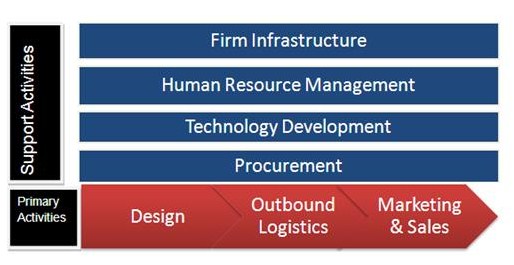
Firm Infrastructure
It was Ortega’s, the founder of Inditex, visionary management style which led Inditex towards success. It was his concept to deliver fashion quick because he was interested in revolutionalizing the apparel industry where the customers must regard clothing as a perishable commodity. To serve his viewpoint integration of designing, manufacturing & distributions were integral to the fast-fashion concept. Most of Inditex’s competitors adopt an outsourcing strategy by outsourcing all production to the external suppliers whereas Inditex maintains its production processes in house. The supply chain structure is vertically integrated.

Brands which make Inditex
Human Resources Management (HRM)
Inditex is an employer to more than hundred thousand individuals coming from 150 nationalities.Many of the Inditex’s current managers began their careers as store employees or other entry level positions. There performance was recorded and talented employees were promoted.Orientation of new employees & training of existing employees adapting to their needs is given importance in the organization.

Technology Development
Inditex achieved a competitive edge over its competitors by developing a quick response system to fashion trends & for this it had to develop state-of-the-art IT system which is integrated throughout the supply chain.
There is constant exchange of information through every part of supply chain which includes shop managers, designers, production staff, and external clothing manufacturers. Sales data, from different geographical locations, is processed & passed along to designers. This helps the designers to cater their designs to the preferences of the customers. The effective use of IT makes Inditex capable to produce very fast turnaround for its fashion designs.

Procurement
Inditex outsources less production than its competitors. Inditex outsources some of its standardardized products like cotton T-shirts which are price-sensitive to Asia as these products have longer shelf lives.
Majority of the Inditex’s supplier factories are in Spain and Portugal and these factories specialize in fashion-customised sewing. The proximity of these factories, specializing in the manufacture of fashionable garments, to the distribution facility saves time and transportation costs. This allows Inditex to respond quickly to fashion trends hence reducing its product risk.

Design
The demand in the fashion apparel industry keeps on fluctuating and any failure to meet the latest demands can be very risky and deteriorate the customer loyalty. Products may become out of fashion even before reach shelves. This can undermine the entire value chain. Hence, to avoid such a risk Inditex encourages continuous exchange of information between the store managers, designers, procurement teams and marketing specialists to ensure that the designs are exclusive & customer driven.
One of the most successful fast-fashion concept chain

Outbound Logistics
The aim is to immediately transfer the products rather than storing them. The schedule is clearly defined which focuses on deadlines on every stage in the supply chain. This helps to save costs and time by eliminating the need of intermediary warehouses to store inventory. This effective way of distribution helps Inditex maintain a strong position in the market.
 
Marketing and Sales
Inditex’s marketing budget compared to its competitiors is very less. It infact prefers to entice customers by selecting prime locations & having its new clothing displayed in its shop windows.
Exclusive clothing on display

There are reasons for this. Firstly, the clothings range changes frequently, hence any advertising activity has to be in line with the latest clothing ranges and this might be expensive. Secondly, Inditex avoids over-exposure of its limited clothing ranges & focusses on the presentation of the stores. It is interested in creating a climate of exclusivity and scarcity so that customers are encouraged to buy. 


Tuesday, May 8, 2012

Once upon a time in Greece

Battered Greece witnessed  its budget deficit fall to 9.1% of GDP in 2011. When George Papandreou took charge of office in 2006, the budget deficit was around 13% of GDP, way higher than the falsified figure of 5% stated by Karamanlis's government. The country currently has a debt of around USD 485 bn. There is immense pressure on the government to raise finance to pay off the debt which seems never-lasting (looking at the figure! but hope lives).
To continue to remain a member of the Euro Zone, members are required to maintain a budget deficit of no more than 3% of GDP and the debt to GDP must not exceed 60%. The current budget deficit is more than 9% of GDP and the debt is more than 120% of GDP!!! Greece is an unusual member of the Euro Zone which in the past had a two digit budget deficit and continues to have a three digit debt to GDP%.

The new coalition government, under Lucas Papademos, like the previous government plans to cut deficits, but we need to analyze how realistic these plans are fiscally and politically. The government is bound to raise taxes and cut spending on pensions, healthcare and welfare of the public. This comes at the expense of the turmoils in the form of protests and strikes campaigned by the strong labor unions in Greece. Any government in Greece is closely linked to the trade unions for political reasons and hence these unions are in a strong position to force governments to satisfy their expectations and demands. Any changes in the austerity measures will have both economic and political repercussions.
So what is the way out ? What options do we have ? Will Greece be forced out of the Euro Zone or will Greece be bailed out by the fellow EU members (mainly Germany and France). Let's analyze both the scenarios.
In the first case, we need to understand that there was no exit clause at the time of setting/joining the Euro Zone. Greece might approach the IMF like Hungary, but additional austerity measures will be required. The costs involved in switching back to the drachma from the Euro will be excessively high. The drachma would depreciate and the debt would surge as it is denominated in Euros. Hence, this is not a feasible option. Now, we are left with the second option, i.e. Plan: Bailout Greece!. It can be depicted from the chart above that France and Germany (the two leading Euro Zone countries) are most exposed to the Greek debt, hence if Greece falls, it will definitely have a knock-on effect and these countries will use all their muscles to save it. We have observed the significance of the Greek debt issue in the politics of France and Germany. The French and German banks have held significant amounts of the Greek debt and hence are a big support to its survival. 


Conclusively, I believe that the Greeks will be bailed out by their fellow EU members. We have to wait for the elections to get over in France and see the approach of the newly elected government towards this highly critical issue.