a Know the Known

Friday, May 25, 2012

Inditex: A strenuous supply chain


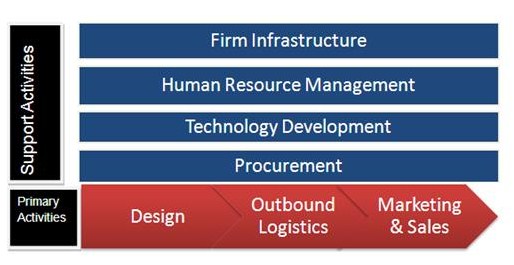
Firm Infrastructure
It was Ortega’s, the founder of Inditex, visionary management style which led Inditex towards success. It was his concept to deliver fashion quick because he was interested in revolutionalizing the apparel industry where the customers must regard clothing as a perishable commodity. To serve his viewpoint integration of designing, manufacturing & distributions were integral to the fast-fashion concept. Most of Inditex’s competitors adopt an outsourcing strategy by outsourcing all production to the external suppliers whereas Inditex maintains its production processes in house. The supply chain structure is vertically integrated.

Brands which make Inditex
Human Resources Management (HRM)
Inditex is an employer to more than hundred thousand individuals coming from 150 nationalities.Many of the Inditex’s current managers began their careers as store employees or other entry level positions. There performance was recorded and talented employees were promoted.Orientation of new employees & training of existing employees adapting to their needs is given importance in the organization.

Technology Development
Inditex achieved a competitive edge over its competitors by developing a quick response system to fashion trends & for this it had to develop state-of-the-art IT system which is integrated throughout the supply chain.
There is constant exchange of information through every part of supply chain which includes shop managers, designers, production staff, and external clothing manufacturers. Sales data, from different geographical locations, is processed & passed along to designers. This helps the designers to cater their designs to the preferences of the customers. The effective use of IT makes Inditex capable to produce very fast turnaround for its fashion designs.

Procurement
Inditex outsources less production than its competitors. Inditex outsources some of its standardardized products like cotton T-shirts which are price-sensitive to Asia as these products have longer shelf lives.
Majority of the Inditex’s supplier factories are in Spain and Portugal and these factories specialize in fashion-customised sewing. The proximity of these factories, specializing in the manufacture of fashionable garments, to the distribution facility saves time and transportation costs. This allows Inditex to respond quickly to fashion trends hence reducing its product risk.

Design
The demand in the fashion apparel industry keeps on fluctuating and any failure to meet the latest demands can be very risky and deteriorate the customer loyalty. Products may become out of fashion even before reach shelves. This can undermine the entire value chain. Hence, to avoid such a risk Inditex encourages continuous exchange of information between the store managers, designers, procurement teams and marketing specialists to ensure that the designs are exclusive & customer driven.
One of the most successful fast-fashion concept chain

Outbound Logistics
The aim is to immediately transfer the products rather than storing them. The schedule is clearly defined which focuses on deadlines on every stage in the supply chain. This helps to save costs and time by eliminating the need of intermediary warehouses to store inventory. This effective way of distribution helps Inditex maintain a strong position in the market.
 
Marketing and Sales
Inditex’s marketing budget compared to its competitiors is very less. It infact prefers to entice customers by selecting prime locations & having its new clothing displayed in its shop windows.
Exclusive clothing on display

There are reasons for this. Firstly, the clothings range changes frequently, hence any advertising activity has to be in line with the latest clothing ranges and this might be expensive. Secondly, Inditex avoids over-exposure of its limited clothing ranges & focusses on the presentation of the stores. It is interested in creating a climate of exclusivity and scarcity so that customers are encouraged to buy. 


Tuesday, May 8, 2012

Once upon a time in Greece

Battered Greece witnessed  its budget deficit fall to 9.1% of GDP in 2011. When George Papandreou took charge of office in 2006, the budget deficit was around 13% of GDP, way higher than the falsified figure of 5% stated by Karamanlis's government. The country currently has a debt of around USD 485 bn. There is immense pressure on the government to raise finance to pay off the debt which seems never-lasting (looking at the figure! but hope lives).
To continue to remain a member of the Euro Zone, members are required to maintain a budget deficit of no more than 3% of GDP and the debt to GDP must not exceed 60%. The current budget deficit is more than 9% of GDP and the debt is more than 120% of GDP!!! Greece is an unusual member of the Euro Zone which in the past had a two digit budget deficit and continues to have a three digit debt to GDP%.

The new coalition government, under Lucas Papademos, like the previous government plans to cut deficits, but we need to analyze how realistic these plans are fiscally and politically. The government is bound to raise taxes and cut spending on pensions, healthcare and welfare of the public. This comes at the expense of the turmoils in the form of protests and strikes campaigned by the strong labor unions in Greece. Any government in Greece is closely linked to the trade unions for political reasons and hence these unions are in a strong position to force governments to satisfy their expectations and demands. Any changes in the austerity measures will have both economic and political repercussions.
So what is the way out ? What options do we have ? Will Greece be forced out of the Euro Zone or will Greece be bailed out by the fellow EU members (mainly Germany and France). Let's analyze both the scenarios.
In the first case, we need to understand that there was no exit clause at the time of setting/joining the Euro Zone. Greece might approach the IMF like Hungary, but additional austerity measures will be required. The costs involved in switching back to the drachma from the Euro will be excessively high. The drachma would depreciate and the debt would surge as it is denominated in Euros. Hence, this is not a feasible option. Now, we are left with the second option, i.e. Plan: Bailout Greece!. It can be depicted from the chart above that France and Germany (the two leading Euro Zone countries) are most exposed to the Greek debt, hence if Greece falls, it will definitely have a knock-on effect and these countries will use all their muscles to save it. We have observed the significance of the Greek debt issue in the politics of France and Germany. The French and German banks have held significant amounts of the Greek debt and hence are a big support to its survival. 


Conclusively, I believe that the Greeks will be bailed out by their fellow EU members. We have to wait for the elections to get over in France and see the approach of the newly elected government towards this highly critical issue.


Monday, April 30, 2012

Iceland: Fish and Investment Banking

In 2003, Iceland's three biggest banks had assets of only a few billion dollars, about 100% of the nation's GDP. By the mid of 2006, the banking assets grew over USD 140 billion and were so much greater than Iceland's GDP, that there was no purpose in calculating the percentage. Many bankers, economists and authors believe that this was a phase when the banking system achieved rapid expansion. The harsh truth is that Iceland was no more a country, but a hedge fund.
The three major banks were pumping money into the Icelandic economy, driving the value of stocks and real estate crazy. Students in universities were fleeing from the economics of fishing to the economics of money.


This materialistic ambition turned out to have a downside. The collapse of the three major banks resulted in banking losses of more than USD 100 billion. For a country with a population of 300,000 the losses per person works out to around USD 330,000. The losses do not end here. Moreover, there were personal losses incurred through foreign currency speculation and collapses in the stock market. In 2011, the public debt per person stood at USD 42,714 more than USA's USD 33,555.

Learning points:
- Too much banking not good for the economic health. Do not create fake capital by trading in assets at inflated values. For example, I own apples and you own oranges. We agree that each fruit is worth millions. You sell me oranges and I sell you apples for millions. Now, we are no more fruitsellers but banks with assets worth millions.
- Give fish a chance. It will work again!
- Do not buy a Range Rover or Bentley if you cannot afford it. In the end, you are left with two options, either you burn it to get insurance money or ship it to a customer to earn in foreign currency.


Friday, April 27, 2012

Does debt really matter?

A lot of people believe or rather assume that debt does not matter as governments around the world owe money to the public, and not the aliens.

However, it matters for two main reasons. Firstly, if the debt grows at a faster rate than the economic output, it implies higher interference of the government in the price mechanism/free market economy. This results in higher taxes being levied (strict fiscal policy) to finance the deficits and we all know that taxes are bad in the current scenario as they discourage spending.

Secondly, the issues faced by current and succeeding governments. No sane government would like to lay an impression on the public that the debt per citizen is on an increasing trend. This comes with political repercussions.

This is indeed a vicious cycle and I am still figuring out the start and end points of the cycle. Kindly, assist!


Saturday, April 21, 2012

The blind eye

Back in 2004, the biggest wall street banks had created the instrument for the self-destruction. The credit default swap enabled investors to bet against the price of any given bond. In simple terms, it was an insurance policy, but with a crack: the buyer did not need to own the insured asset (i.e. the risks incidental to the ownership were never transferred in actual). Consider the credit swaps the titanic and the recession the ice berg. The collision being caused by the so called sane people residents of the insane world.

We all observed the the false boom in the first world developed economies, post 2002. The economic growth was super heated and fueled by borrowing. The US national debt, alone is more than USD 15.5 trillions, and the average debt per citizen is more than USD 50,000. For a moment, imagine the global debt and the consequences that will follow up in the coming times (hope it does not). Human kind has never, for sure, witnessed this kind of accumulation of debt in world history.

Private enterprises, majorly banks, were bailed out by the local and federal governments, after all the financial institutions were big credit lenders to the governments and local bodies. The governments plunged themselves into debt and any increase in interest rates means a greater proportion of the budget being consumed to meet the interest payments on debts.

In my coming blogs, I will be analyzing the blunders in Greece and Iceland in particular. 


Wednesday, April 18, 2012

An Insight: The UK recession in historical perspective


UK gross domestic product is predicted to grow 1.1% in 2011, down from the 1.5% forecast in the IMF's previous World Economic Outlook report in June.
The growth forecast for 2012 has been slashed from 2.3% to 1.6%.
In order to interpret the current recession we need to analyse the earlier recessionary periods.
Interwar period (1918-1939)
UK was a dominant player in the international gold-standard system during the 1870-1914 period. The end of the first world war was followed by an international restocking boom which went into reverse swiftly. This impacted the UK exports and hence the GDP, leading to high levels of unemployment.
The recession was short lived and the recovery was weaker than that experienced by USA and Germany. 
Great Depression - 1929
During the Great Depression, the UK exports declined by 32%, but the GDP fell only by 4.8% which was less severe than the contractions faced by USA and Germany. The decline in world demand resulted in lower prices of primary products and this boosted the consumerism in the UK which was a major support to the GDP, however UK exports lost their competitiveness in the international markets resulting in high levels of unemployment

Recovery Again!
Sterling was departed from the gold standard and was depreciated to competitive levels. The BoE adopted a more lenient monetary policy which resulted in increase public spending and investments in house building. The exports, however remained less in demand due to recession in the US.  

Post-war recessions
After the second world war, consumerism played a greater role than investments and exports in running the business cycle.

1970s
This was a completely new era. The fiscal and monetary policies adopted were expansionary in nature and the banking system was deregulated. However, the oil crisis in 1973 resulted in cost-push inflation which pushed the economy into recession.

1980s
The 1979 or second oil crisis caused due to the Iranian revolution. UK experienced an appreciation in the sterling due to it becoming an oil producer. This again made UK less competitive in international markets resulting in high levels of unemployment (due to decline in productivity) and inflation caused by high oil prices. On top of all this, the fiscal policy was tightened by the Thatcher government.

1990s
Deregulation of financial institutions and consumer optimism led to growth. The consumer optimism was depleted due to the tightening of the monetary policy to support the sterling to remain in the European ERM (Exchange Rate Mechanism). 
Recovery was possible again when the sterling was withdrawn from the ERM. This resulted in the fall of interest rates which again led to consumer and business optimism. 

Current Recession
The economic growth achieved prior to 2007/2008 was mainly due to favorable demand side policies. This resulted in over-heating of the economy. The debt to GDP ratio increased rapidly, amid consistent balance of payments deficit. Credit was being easily provided and the financial institutions were not exercising self-regulation. Savings were diminishing underpinning the consumption and investment. Huge budgets were being allocated to non-productive segments, such as defense. It has to be noted, the monetary policies yet remain expansionary in nature.


Conclusion
-Depreciate of sterling to achieve competitiveness and export led growth
-Cut public debt and set priorities in budget and its allocation
-UK has good spending in Education and Health care as a percentage of GDP. It can be anticipated that the productive capacity of the UK will grow in the long run.
-Switch focus from demand management to supply-side policies, or rather both (hand in hand).


Note: The above views are personal and can be debated upon due to them being subjective and judgmental.


Monday, April 16, 2012

Recep Tayyip Erdoğan


Recep Tayyib Erdogan was elected as the prime minister of Turkey in 2003.  He graduated in 1981 from Marmara University's Faculty of Economics and Commercial Sciences.


In the current scenario, when the Balkan economy is severely hit by European debt crisis, the Turkish economy dominates and is part of the G-20, being the 16th largest economy. Erdogan helped Turkey to enter in to collaboration with world economies. Moreover, his team added spiritual strength to the Turkish economy by adding value to the currency, not only by dropping the additional zeroes and giving it a new identity (i.e. an anchor which depicts support) but by making the people realize the value of Turkish Lira in their wallets who earlier would go to foreign exchanges.

Erdogan has also been known as a diplomatic dynamo by various intellects. Be it any issue in the Middle East starting from Palestine to Syria to Iran, Turkey's input to it matters. During his tenure, the Turkish improved their economic and political dies with the arch-rivals Greece. Trade with Saudi Arabia continues to increase over time. The support towards the calamity-struck nations is highly appreciable. Not only the public has contributed towards the social causes but the ruling elite has actively led it from the front.

On basis of my brief analysis, it can be concluded that good governance can solve various issues ranging from geo-political to social to foreign policy. The Turkish model is definitely worth a look.